

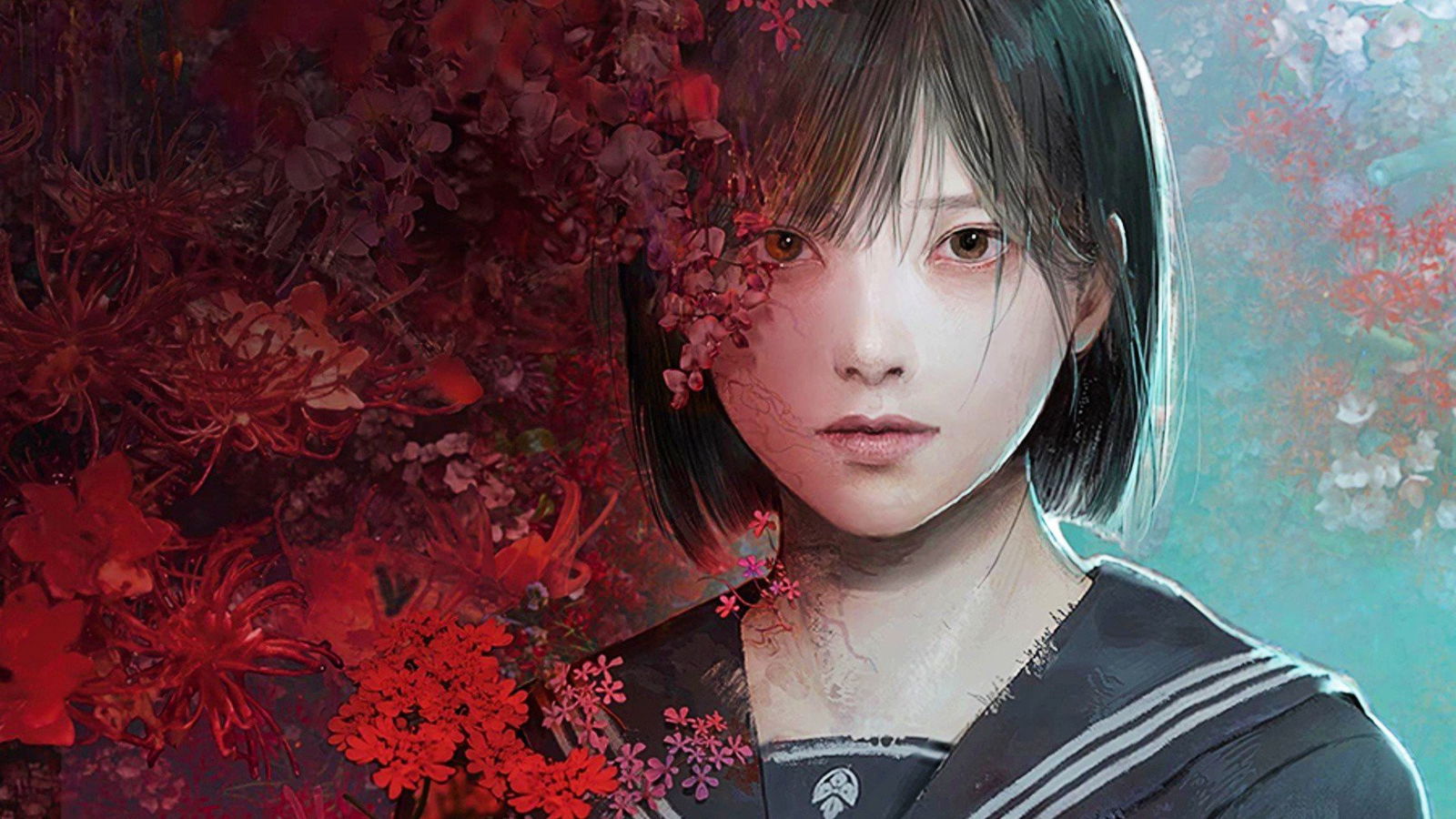
The foggy town of Silent Hill has occupied a deeply unsettling space in the horror genre since the late 90’s. The purgatorial landscape has always been more than cheap jump scares, presenting personal trauma manifested as nightmarish reality for its afflicted protagonists. Following a long period of dormancy and a mixed bag of installments, the series’ future seemed bleak until the Silent Hill 2 Remake re-established the IP’s relevancy and demand. Barring the remake, Silent Hill f offers the first traditional Silent Hill experience, albeit with unique style all its own as a standalone spinoff, since 2012’s maligned Silent Hill: Downpour. With such a lengthy hiatus, expectations couldn’t be higher for Konami‘s flagship horror return. Fortunately, Silent Hill f presents a bold new direction from which terror blooms anew in a masterfully crafted experience that honors the series’ legacy while forging its own identity.
Set against the beautiful and eerie backdrop of 1960s Japan, Silent Hill f breathes harrowing new life into the fog-obscured horrors. The fictional village of Ebisugaoka hosts repulsively striking visuals that create an air of chest-tightening discomfort. The familiar grime and rust-caked environments of previous games are gone, replaced by grotesque, bloody blossoms that sit starkly against the depressive and often claustrophobic surroundings. This creeping plague of fog, foreboding flora and pulsating tendrils spreading across an idyllic Japanese countryside make for an aesthetically captivating horror experience, where even the alluring beauty of cherry blossoms is given frightening new expression. Silent Hill f turns the series’ mainstay presentation into a twisted garden of horrors, a dreadful biological nightmare, that is masterfully interwoven with imagery of Japanese folklore. This design sits as one of the title’s strongest assets, creating a sinister setting that is equally excitingly familiar and refreshingly foreign. And it is elevated by chilling sound design, wherein every distant creak, rapid skitter and inhuman wail sends the hair standing on end.
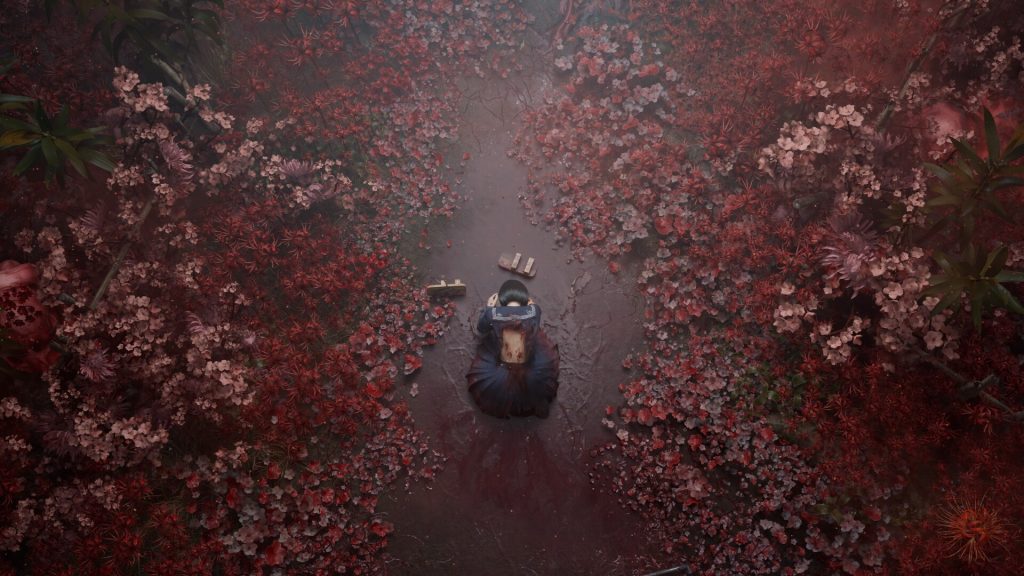
Doom and Bloom
Trapped within this otherworldly hell, where the line between reality and nightmare is dissolving, is high school student Shimizu Hinako. Traumatized by her problematic home life, inequitable societal pressure and other deeply ingrained issues, Hinako is forced to contend with it all as her world transforms into a wicked reflection of her innermost fears and closely-held secrets. As is the Silent Hill norm, that means every monstrous design is crafted with specific narrative purpose, adding to the unsettling nature of it all as these heavy themes are explored. Every character’s sin is laid bare, disclosed in sickening fashion through the various monstrosities hunting them in the concealing gloom. Without revealing much, Silent Hill f assembles an engrossing story that doesn’t shy away from the sensitive topics burdening its cast, ensuring that engagement is tightly maintained through to the bitter end of the roughly 10-hour journey—as a side note, a default ending is present on the initial playthrough, but several unlockable endings become available through New Game+, promoting additional playthroughs to see how players can affect the ultimate outcome.
As a high school student, Hinako is not particularly adept in the art combat, especially against demonic threats. As such, the gameplay mashes up impactful melee combat with intentional clunkiness to convey the desperate, frantic struggle for survival. Despite the similarly cumbersome combat for which the series is known, Silent Hill f evolves its encounters with new mechanics. Now lying at the heart of it all are stamina and Sanity systems. The former controls the flow of Hinako’s strikes, which come in light and heavy varieties, and dodges. Managing the stamina resource to weave between offensive and defensive options adds a layer of tension to each fight and further highlights the character’s vulnerability. Even if finding a flow of telegraphed counterattack openings makes easy work of lesser foes, the weapon durability system places restraints on foolish overconfident behavior. Sanity sits as a high risk, high reward resource that can be leveraged to perform powerful focus attacks. However, mistiming its use can result in the notable loss of that resource, enhancing Hinako’s susceptibility to enemy attacks. On the Story difficulty, which is essentially normal in this game, Sanity can be restored simply by interacting with a shrine. On Hard, items (such as divine water and ramune) can be consumed or Faith, the in-game currency, can be spent to restore the Sanity meter. While not perfect, Silent Hill f possesses some of the most engaging combat in the franchise, and its effectiveness is strengthened by intense boss fights.
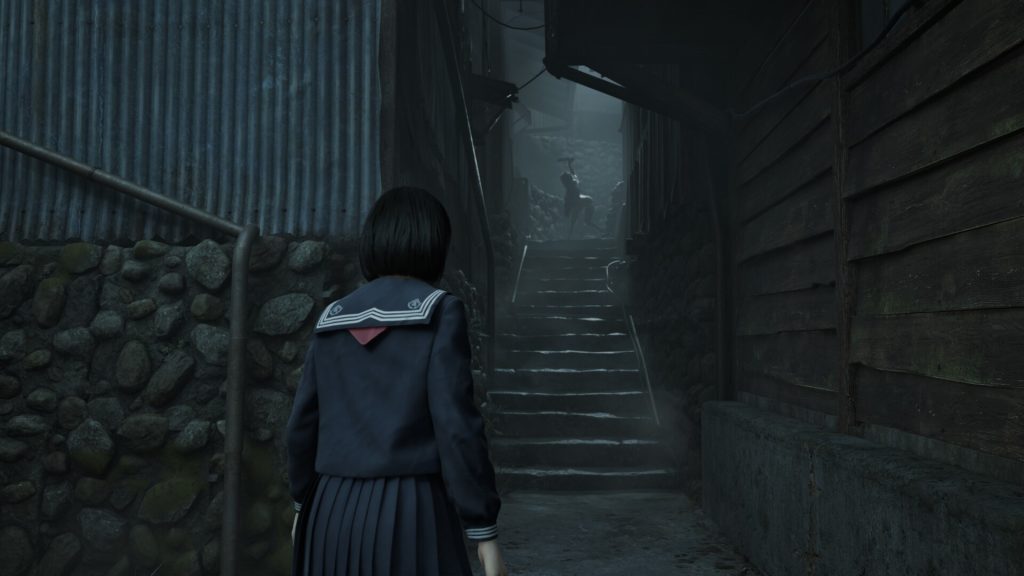
Riddled With Mysteries
Combat is only a single piece of the package, however. Silent Hill f shines in its puzzles in a welcome return to the franchise’s roots. A keen eye for environmental clues and a mind for abstract, often unsettling, logic is required to successfully navigate the distressing riddles and mysteries punctuating the narrative. Deciphering the meaning behind cryptic messages in a field scattered with corrupted scarecrows was an early puzzle encounter which evoked critical thinking and heart-pounding anxiety in equal measure, as not all contorted effigies were truly lifeless. Seeking solutions under the constant fear of impending assault bolsters the psychological suffering sitting at the heart of the game.
The only real critique, and it’s far from damning, lies with the inventory and upgrade systems. Haniko has limited storage, which itself is often a staple of the survival horror, but it leads to moments of backtracking and a middling offering mechanic. When inventory space is capped out, items cannot be dropped; they must either be completely destroyed or offered to shrines, the latter of which accrues more faith. Accumulated faith can be spent on upgrades (e.g., stamina, health, buff-granting omamori charms, etc.) that improve Haniko’s resilience, but don’t expect her to become a powerhouse by the end of the unearthly tale. The systems are meant to add depth to the unfolding events, but they feel shallow in their implementation; they can largely go untouched, unless the player wishes to backtrack to previous shrines to offload items before seeking out that which they had to pass on earlier when storage slots were unavailable. Such pursuits only serve to slow the narrative pacing, breaking up the exhilarating momentum, with unnecessary lulls. However, these issues are small blemishes on an otherwise near-perfect game.
Silent Hill f Review Verdict
Silent Hill f: is a testament to the fact that the spirit of the franchise can exist in new forms, giving birth to terrifying ideas that comfortably sit alongside the series' peaks. It is a game that is certain of its identity, and it pursues its image with confidence and conviction, never shying away from forcing players to contend with the amorphous, debilitating conflicts projected from the recesses of the mind and given maddening, metaphorical form. Silent Hill f is a terrifying, emotional, and unforgettable evolution, proving beyond a doubt that Silent Hill is very much alive, and more frightening than ever. – Joshua
[Editor’s Note: Silent Hill f was reviewed on PS5, and a copy was provided to us for review purposes.]
