

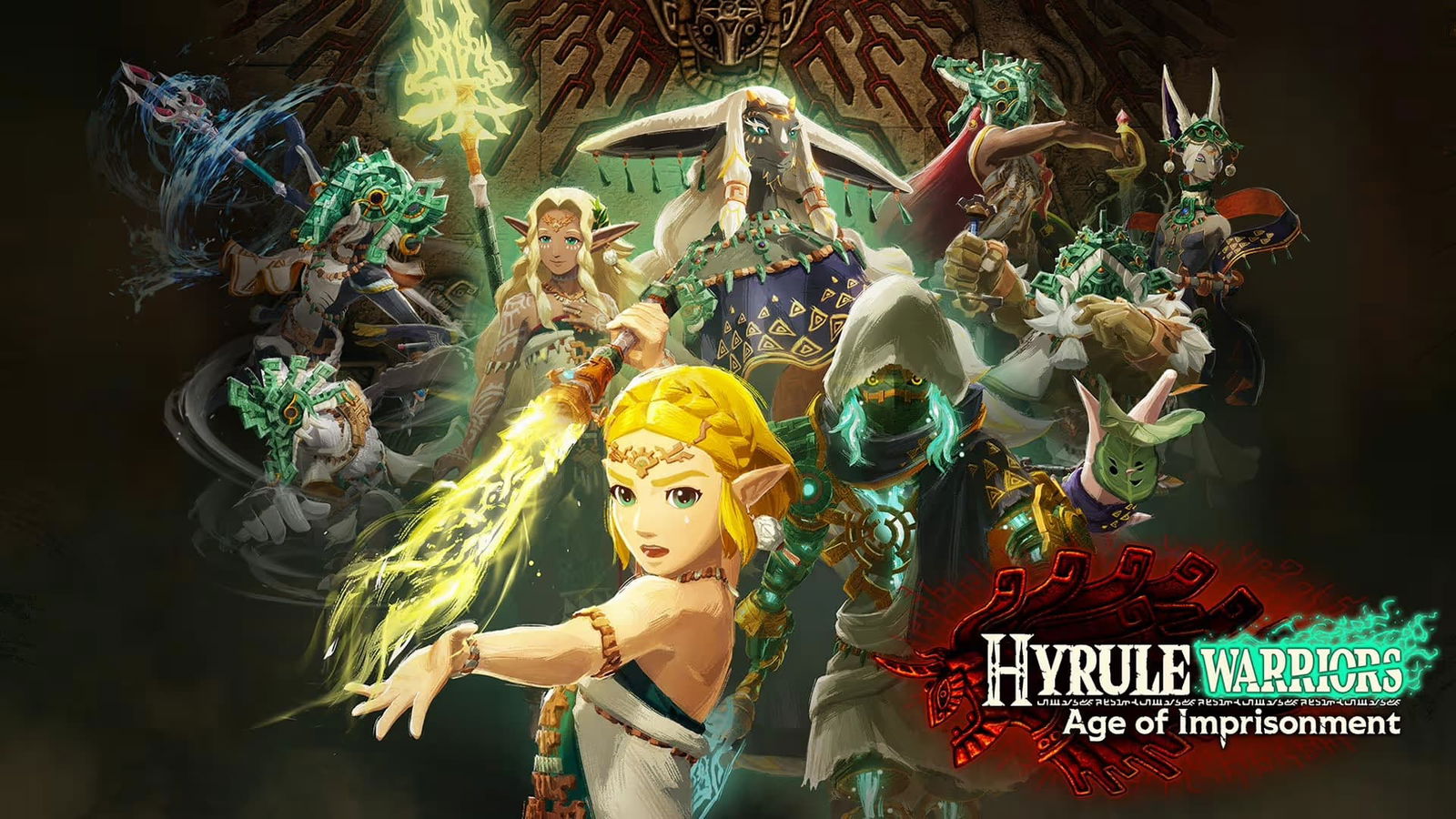
The Hyrule Warriors series, much like its Dynasty Warriors progenitor, is heavily reliant on fan service and the sheer, chaotic joy of mowing down hundreds of enemies at once. But with Hyrule Warriors: Age of Imprisonment, Koei Tecmo and Nintendo have done something more ambitious: they’ve taken the Musou formula and draped it in the oppressive forces at work during the establishment of Hyrule kingdom. Set during the legendary Imprisoning War—the catastrophic event that sealed Ganon in the Sacred Realm and plunged the kingdom into a terrifying, fractured state—Age of Imprisonment is a successful refinement, even if it can’t quite escape the genre’s inherent flaws.
Hyrule Warriors: Age of Imprisonment doesn’t bother with the alternate history shenanigans of its predecessor, Age of Calamity. Instead, it grounds itself firmly in the canon past, allowing us to witness the founding of Hyrule under King Rauru and Queen Sonia, the escalating conflict with the Demon King Ganondorf, and the moment the seven Sages were called upon to defend the newly formed kingdom. This focus on core lore narrows the scope of the game, unlike its predecessor, to ensure that the foundations of Tears of the Kingdom are never contradicted. The central campaign leverages this restricted setting, offering a narrative that feels like it is truly essential to the lore, even if it doesn’t necessarily capitalize on its long-awaited narrative opportunities. However, it does provide texture to the legendary era of the Sages and the desperate fight to rebuild in the face of the ever-present threat of the Demon King.

(S)Age-Old Tale
Although we get to spend time with characters previously confined to in-game texts and murals, the cast is composed largely of newcomers and original additions rather than recognizable mainstays for which fans may yearn—the Mysterious Construct is the game’s official stand-in for Link given his canonical absence. Fortunately, the Sages boast impressive movesets and eye-catching designs, made immediately apparent through the introductions of Hyrule’s first king and queen. The various Sages may not be fully fleshed out in ways lore-heads will desire most, but they are given enough personality and motivations for taking up arms. And most importantly, they’re fun to play. Seeing the origins of the Sages’ respective powers in action, and how their ancestors integrated Zonai technology into their fighting styles, is a pure delight.
The most compelling draw of any Musou game is the roster, and Age of Imprisonment delivers 19 playable characters, one more than Age of Calamity‘s base count, many of whom are entirely new or drawn from deep within the established lore. Although these characters present thrilling insights into Hyrule’s past, they aren’t all explored as deeply as I hoped. As mentioned, the cast includes the Seven Sages from the Imprisoning War era, each with playstyles built around their respective magical elements. We have the Fire Sage, a Goron who causes lava to erupt from the ground, and the Lightning Sage, who sends forth bursts of electric energy to clear the field. Of course, there are options beside sages, including a Zora princess, a Rito tribe leader, and Gerudo warriors.
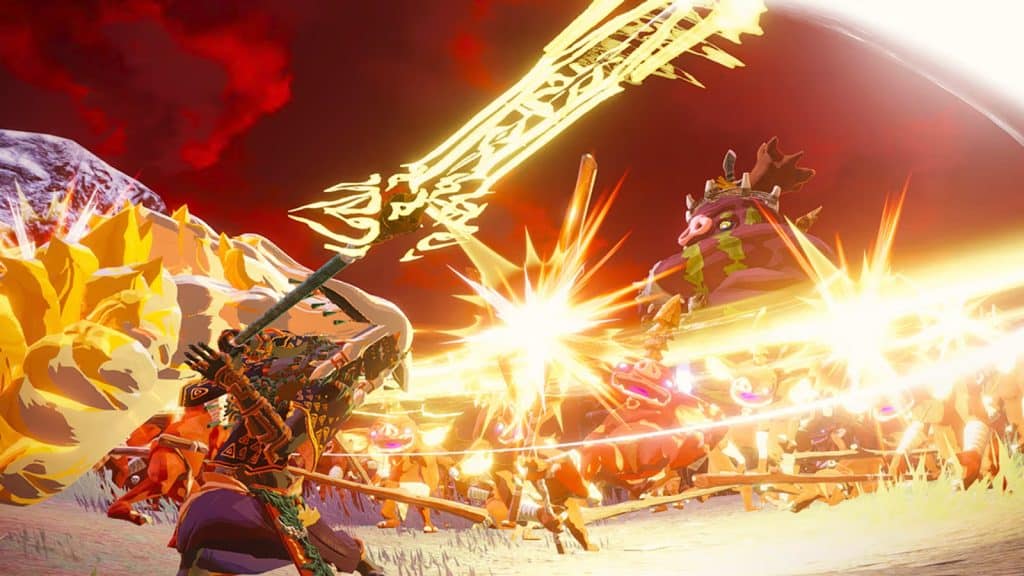
The combat, while flashy, is content to walk a well-trodden path, more focused on fine-tuning its Musuo foundation and lifting mechanics from Tears of the Kingdom. At its core, Age of Imprisonment adheres strictly to the Musou formula: you are a one-person army, slicing through literal thousands of Moblins, Bokoblins, and Lizalfos, capturing keeps, and completing objectives on a strategic map. The game uses the engine and mechanics established in Age of Calamity, meaning core features like dodging into Flurry Rushes and leveraging Weak Point Smash attacks are integral to success. Where it innovates is in the characters’ individual toolkits.
Tears of Joy
While the core loop remains intact, Age of Imprisonment polishes the combat system to great effect. It feels faster, tighter, and more reactive than previous outings. And it all runs at a fairly steady 60fps on the Switch 2—as a side note, the action drops to 30fps in two-player co-op. The multi-character combat system maintains a swift, adaptive flow of battle. You can seamlessly swap between heroes, instantly transitioning from a close-range fighter like Zelda to a roguish Korok or a Zonai device-riding Sage. This allows for on-the-fly tactical decisions based on the skills assigned to each character.
Given that the boss-like enemies in the game can execute different types of red-hued special attacks, having the right counter on-hand is important. But there are not limitless slots on a single character to account for every scenario. Having a character prepared with skills that can counter the various forms of the aforementioned special attacks (e.g., air, rush, shield, etc.) is important, but it lessens the available inputs for other equally helpful options like Zonai devices, including a flamethrower, rocket, fan and much more. Building out characters to handle specific situations adds tactical depth and provides rewarding combat encounters when the meticulously designed team comes together under their perfect use case.
Each character also sports unique abilities and a list of combos expanded throughout support missions. All of these are strongly integrated with existing Tears of the Kingdom mechanics. For instance, the Zonai devices can be weaved into attacks, only limited by a battery gauge. This constant feedback loop of satisfying spectacle, strategic thinking, and character depth keeps the hours flying by, making the act of clearing out thousands of enemies feel less like a grind and more like a carefully executed assault. That said, the core gameplay loop still demands hours of repetitive action. If you don’t enjoy the fundamental satisfaction of clearing a thousand foes in a matter of minutes, no amount of Zelda fan service or refined mechanics will sustain you through the journey.
Hyrule Warriors: Age of Imprisonment Review Verdict
Hyrule Warriors: Age of Imprisonment: is a strong Musou game and a near-essential piece of spin-off media for Legend of Zelda. Although your mileage may vary with this particular genre and its repetitive nature, it manages to balance the necessary fan service and over-the-top action with a grim narrative that gives insights into the franchise’s ancient history. – Joshua
[Editor’s Note: Hyrule Warriors: Age of Imprisonment was reviewed on Switch 2, and a copy was provided to us for review purposes.]
